
Column One, part of Rhetoric of Health & Medicine Vol. 6, No. 4 (2023)
Graphic RHM co-editors’ note:
Catherine and Blake would like to thank RHM co-editors, Cathryn Molloy and Kim Hensley Owens, and editorial board members for their input and guidance in conceiving this new column. We offer a special thank you to RHM associate editor Bryna Siegel Finer, whose vision, ingenuity, hard work, and patience make the delivery of this column possible.
Given where the column is housed, we must work with the accessibility constraints and possibilities of the medicalrhetoric.com website and its WordPress template. Accordingly, you can access each comic in Column One in at least two different ways: 1) Click on the HTML version of each comic, all of which have images with concise alt text and some of which include options to access longer descriptive text files for accessibility purposes; or 2) Download a PDF of the comic and artist statement, which includes concise alt text.
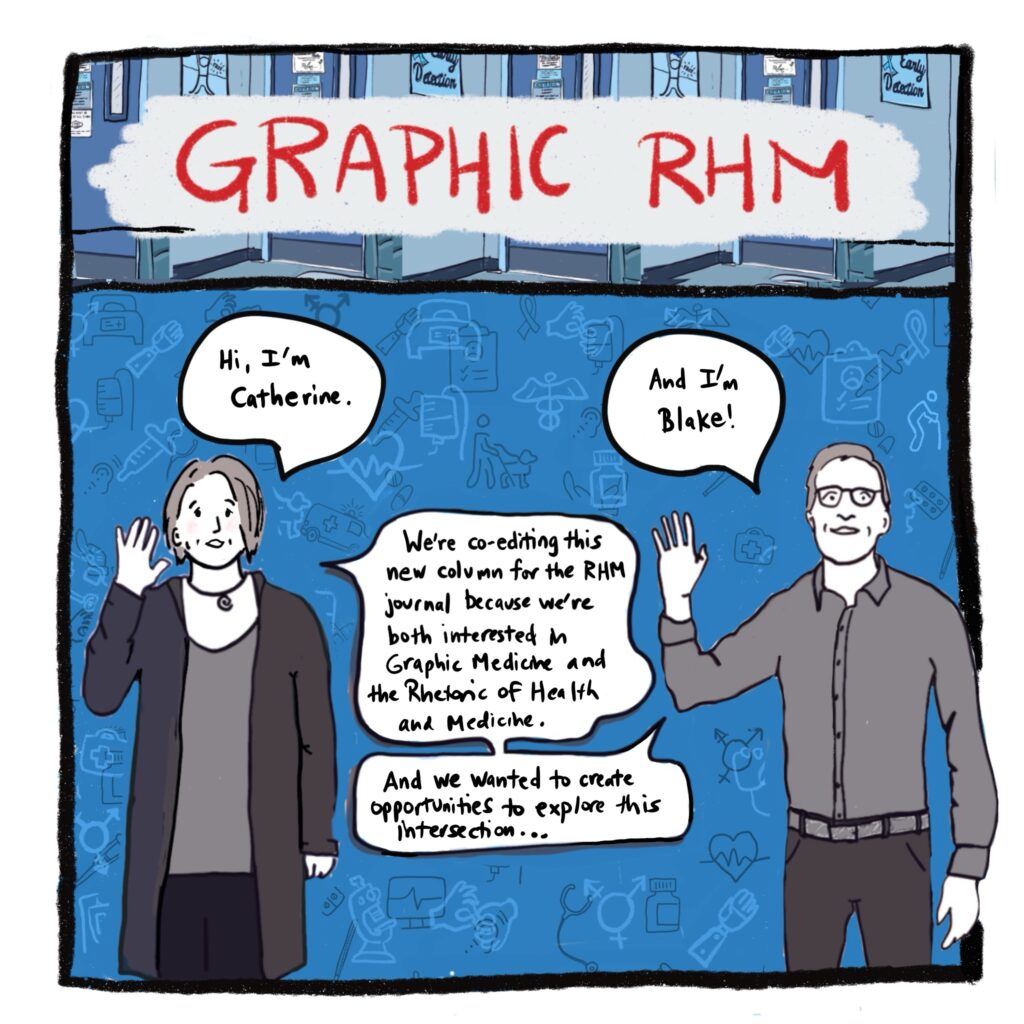
“Introduction to Column One,”
Catherine Gouge (she/her) and
Blake Scott (he/him)
HTML | PDF
In this comic, the co-editors introduce both Graphic RHM as a column and as an idea/practice, highlighting themes and comics inside the column, and inviting future work.
To cite: Gouge, Catherine and J. Blake Scott. (2023). Introduction to Graphic Medicine Column One. Rhetoric of Health & Medicine, 6(4), http://medicalrhetoric.com/graphicRHM/home/archive/column-1/
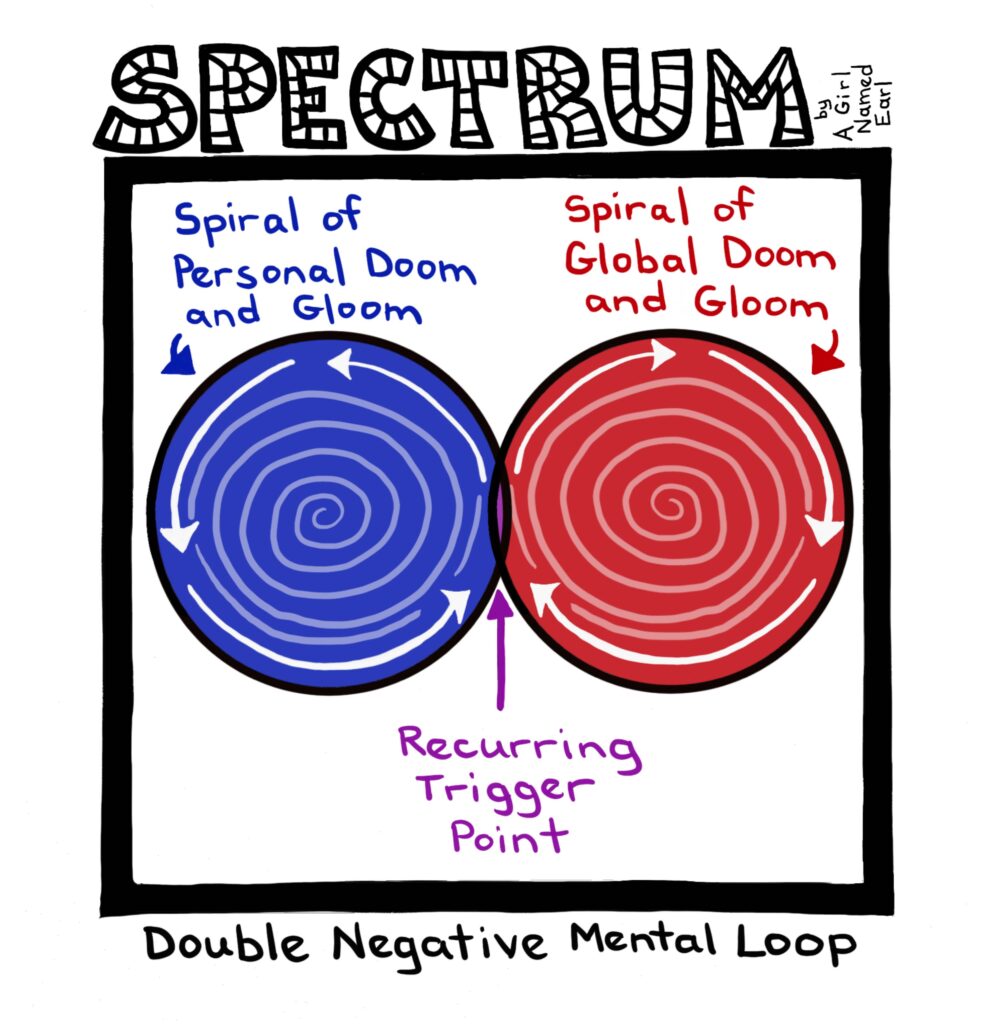
“SPECTRUM,” Erin Fitzgerald (she/her)
HTML | PDF
This comic explores the therapeutic impact of drawing responses to cartoons the author had already drawn depicting scenarios she struggles with.
To cite: Fitzgerald, Erin. (2023). SPECTRUM [comics and artist statement]. Rhetoric of Health & Medicine, 6(4), http://medicalrhetoric.com/graphicRHM/ home/archive/column-1/ftzgerald-1/
![Image: Panel shows torso and head of a darker-skinned, mixed-race woman, Ellie Lauren, facing the reader with auburn hair that is short on the sides and full on the top. The patient focus of this comic, Ellie will be in most of the other panels as well. Here she is wearing large round glasses, earbud headphones, and a pencil behind her right ear. She is wearing a black shirt and purple jacket with a flower on the lapel, and she is holding a small notepad with a page turned over reading “Raynaud’s Phenomenon. Constriction of small blood vessel.” A red arrow with a “3.” directs reader to the next panel on the right. Audio and Text: Panel 2. After Ms. Lauren’s appointment, she sat in silence and reflected on her medical conditions. [Ms. Lauren’s internal dialogue:] “I know that my medication takes time to work. However, the pain has become unbearable. I can no longer hide the marks and rashes on my face and body. Dr. Coles is right. I need to rest, and I will use the Family Medical Leave Act to protect my job for up to 12 weeks. To lose my employment with a disease like lupus might end up a deadly situation.”](http://medicalrhetoric.com/graphicRHM/files/2024/01/Screenshot-2024-01-30-at-9.35.49 AM.png)
“BENNU—A Visual Ethnographic Short Story of a Counselor and Excessive Punishment, Volume 1,” Kelly Dozier (she/her)
HTML | PDF
This comic offers a multimodal (with audio) portrayal of the author’s embodied and rhetorical negotiations of living with lupus.
To cite: Dozier, Kelly. (2023). Excerpt from “BENNU”—a visual ethnographic short story of a counselor and excessive punishment, volume 1 [comic and artist statement]. Rhetoric of Health & Medicine, 6(4), https://medicalrhetoric. com/graphicRHM/home/archive/column-1/dozier/

“Immortal Lightheartedness,” KC Councilor (he/him)
HTML | PDF
This contribution explores how comics can create agentive, non-normative stories and draws attention to the rhetorical dynamics of such experiences.
To cite: Councilor, KC. (2023). Immortal lightheartedness [comics and artist statement]. Rhetoric of Health & Medicine, 6(4), http://medicalrhetoric.com/graphi- cRHM/home/archive/column-1/councilor/
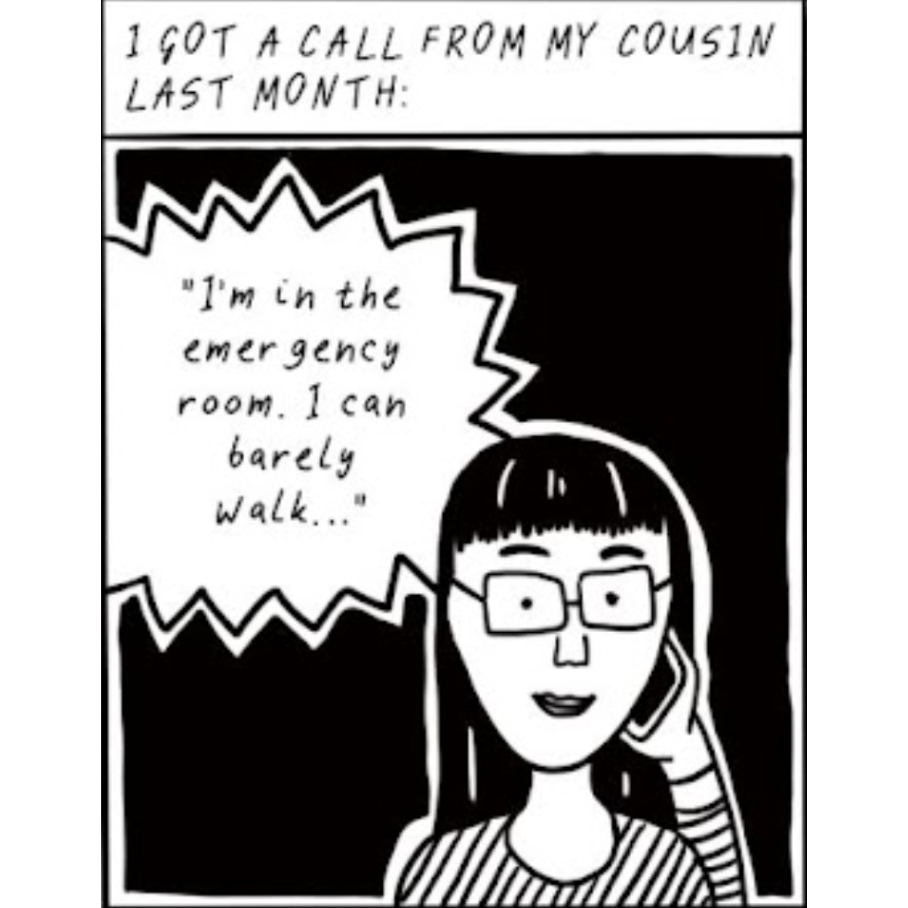
“It Stays in the Family,” Maja Milkowska-Shibata (she/her)
HTML | PDF
In this comic, the author shares an experience she had as a medical interpreter for a family member, highlighting the ethical and pragmatic challenges of working from multiple positions.
To cite: Milkowska-Shibata, Maja. (2023). It stays in the family [comic and artist state- ment]. Rhetoric of Health & Medicine, 6(4), http://medicalrhetoric.com/ graphicRHM/home/archive/column-1/milkowska-shibata/
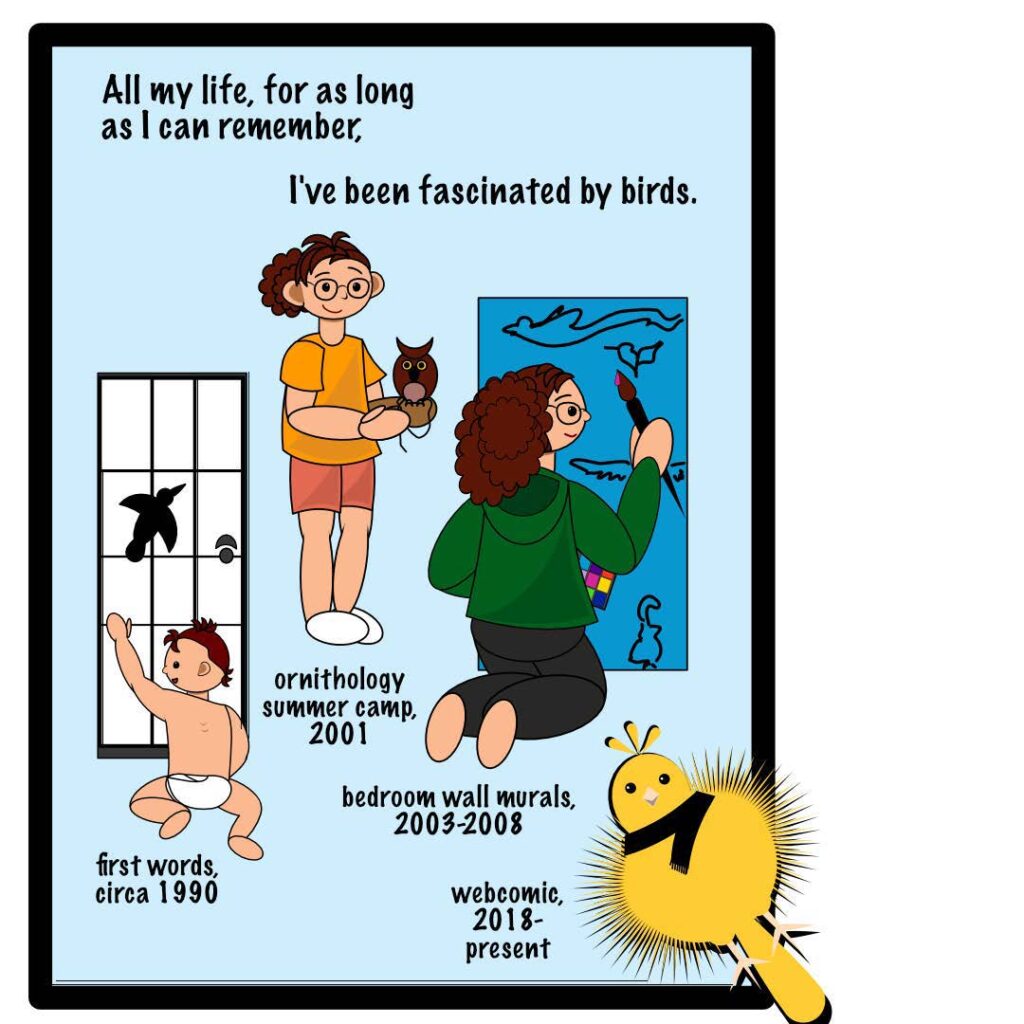
“A Field Guide to Neurodiversity,” Erin Kathleen Bahl (she/her)
HTML | PDF
This comic shares the author’s experiences navigating diagnostic rhetorics and draws attention to conversations around neurodiversity and neurodivergent lived experiences.
To cite: Bahl, Erin Kathleen. (2023). A feld guide to neurodiversity [comic and artist statement]. Rhetoric of Health & Medicine, 6(4), https://medicalrhetoric. com/graphicRHM/home/archive/column-1/bahl/
To Cite:
Author. (2023). Title of comic. Rhetoric of Health & Medicine, 6(4), http://medicalrhetoric.com/graphicRHM/home/archive/column-1/.