
Note: This piece is part 2 of a series about drawing comics as a therapeutic practice. Part One, titled “SPECTRUM” and included in the first Graphic Medicine column, can be found here: http://medicalrhetoric.com/graphicRHM/home/archive/column-1/
Access this comic as a PDF or read below.
Comic Takeaways
- Cartooning (drawing comics) can be a way for some people to work through overwhelming emotions or situations.
- Drawing response cartoons can be a way to get “unstuck” from a current frustration or difficult situation, including a mental health challenge as a patient or researcher.
- Becoming unstuck is not the same thing as moving forward. These are two separate processes or steps.
- After getting unstuck from whatever barriers are present, it can be easier to consider options for what’s next, as those options are not always visible from the “stuck” space.
- RHM and adjacent scholars can learn from people’s embodied, artistic responses to mental health challenges as forms of rhetorical invention.
Artist Statement: On Reflexive Response Cartooning
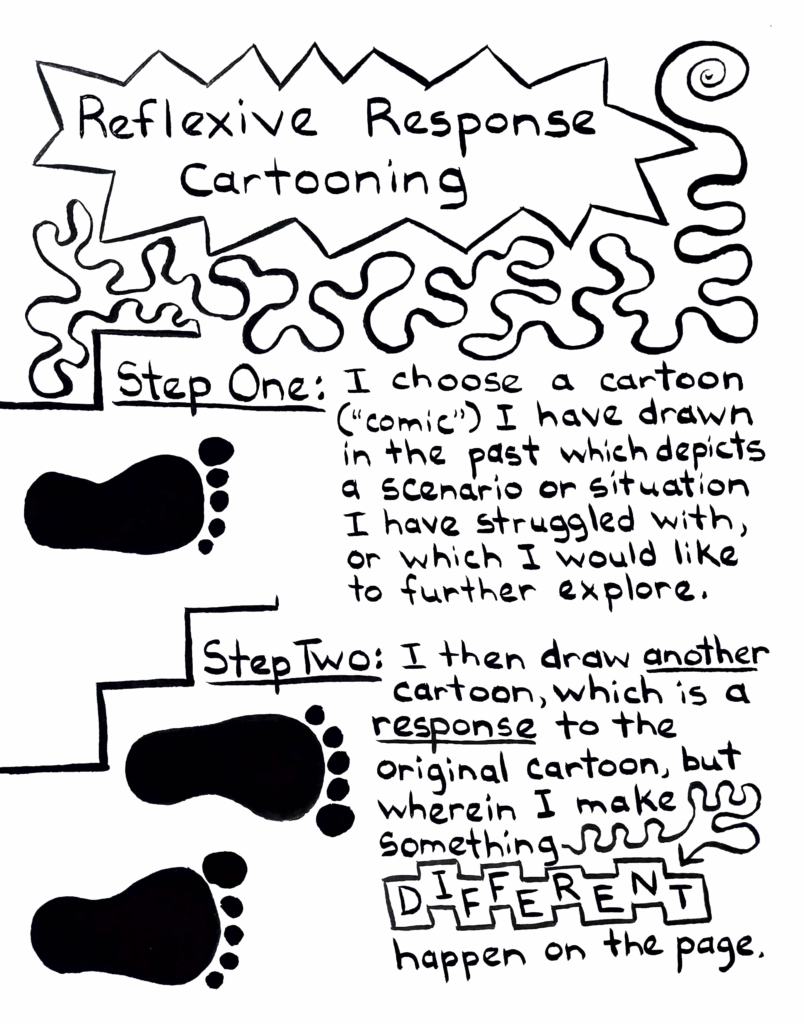
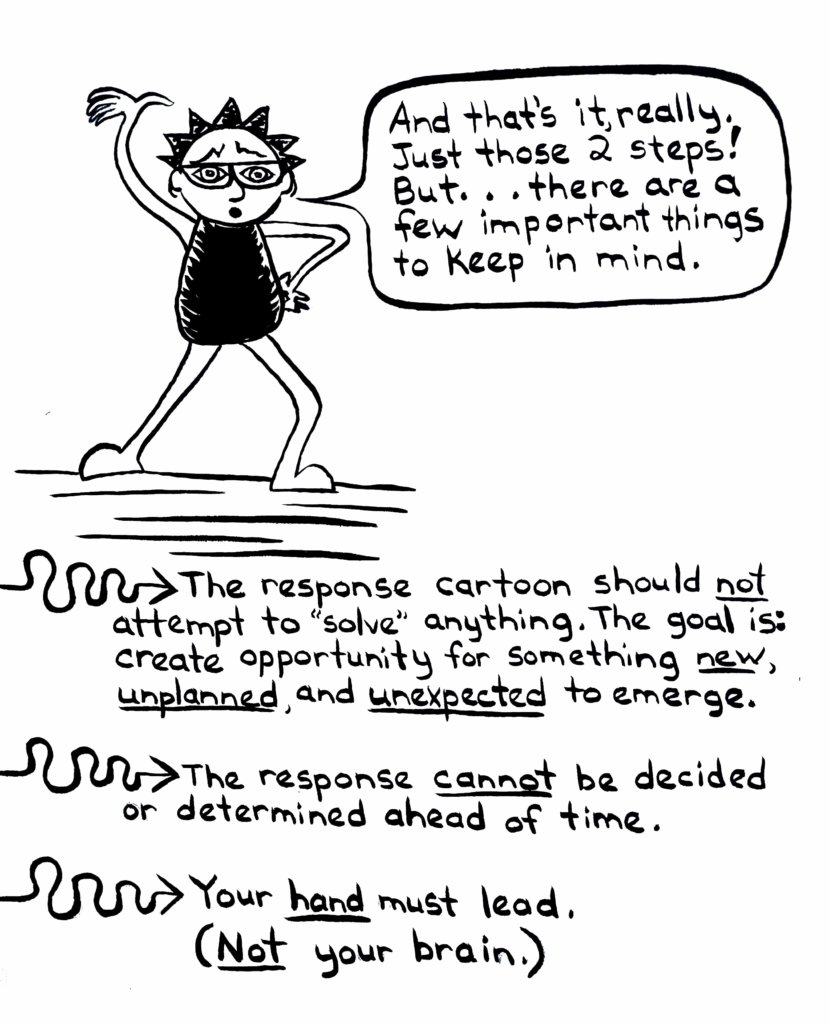
What is “reflexive response cartooning”? In short, it is a term and a process I have made up. It is also a practice that has been useful to me in recent years, to work through difficult emotions and realities, and to get unstuck when everything feels overwhelming. (In column 1, I did not use the term “reflexive response cartooning” to describe this practice. But since then, it feels like the right description.) In this piece, I will attempt to explain a bit more about the primary goal of this practice: getting out of a “stuck” place, and into a mode where change is possible.
Systems of health and medicine, including mental health, are often centered around solutions. This is logical to some extent. Any person seeking out something from a professional system is probably looking for some type of solution, or at least next steps. I do, however, think we need to be careful about the idea of solving something, or believing that our mental health is a thing that needs to be “solved”.
When in traditional therapy over the years, I have often struggled with this concept. While I clearly was attempting to better understand something, or find some tools to help move through it, I would always feel more like I was in a space looking for solutions once I got across that office threshold. I don’t know how much of that was coming from my own interpretation of the way the systems have been depicted in society all my life, or from societal pressures about self-improvement, or from intentional messaging from those systems. In any case, it has been something I have had to think about and actively resist when I am in a systemic “therapeutic” space.
I want to reiterate that my practice of drawing cartoon scenarios, and then drawing “response cartoons” to further think about those scenarios, is not the same as therapy. It is, however, therapeutic for me to do this. It also helps me think about when and how to bring different parts of myself into actual therapy spaces when the time is right for that.
The issue I have with solution-based practices is that a solution indicates a problem. It feels so singular and finite and detachable from everything else. It feels like saying that some problem–some entity in its own little bubble–suddenly popped up in my reality, and it is now up to me (and perhaps also up to whoever is helping me navigate the issue, such as a therapist) to “pop” or remove this bubble so that it is no longer there. But in truth, we both (myself and the therapist) surely know that this is not how therapy works. It is not how life works. It is not how people work. Sometimes that fact even comes out in the conversations we have.
Still, the pull of the mental health system often puts me right back in that mindset of being there to solve a problem. And even if I hadn’t come into the space with a pathologizing view of what was going on, once I speak it in a traditional therapy setting, the pathologizing angle suddenly appears, as if brought into being by the space itself. (That is the sneaky power of systems. Even when we disagree with the some of the ways in which they operate, and even when we ourselves work within them at times, they can still affect how we see things subconsciously.)
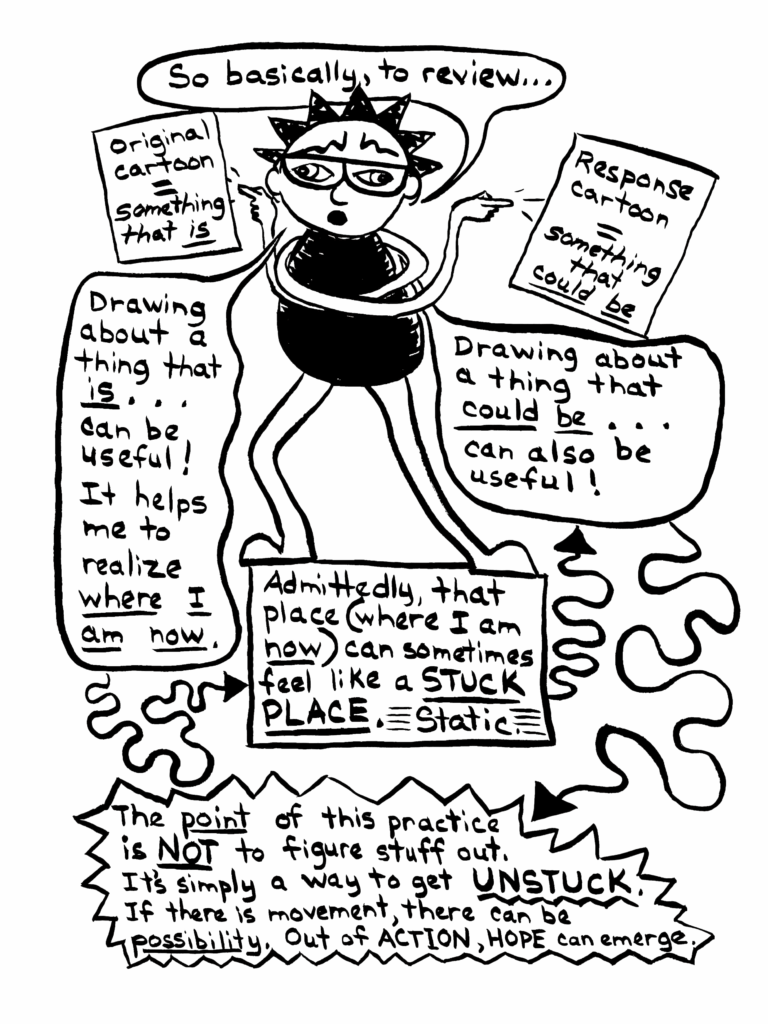
Another thing I would like to point out about this process of response cartooning is that it specifically and necessarily avoids trying to find a solution. The reason for this is partly because of the inadvertent tendency we all have to fall back into the systemic approaches we have encountered, even when we are actively trying to counter them. But also, it is because the mechanism of this process is doing something different altogether. Reflexive response cartooning is not searching for an answer or even a particular path forward. It is almost the opposite of that. It is, instead, only focused on the act of getting unstuck.
The reason this is important for me personally is because the problem of being stuck is not the same as the “problem” of not knowing what comes next. I think people often assume that these things are more directly related than they feel to me. I may get stuck, making it hard for me to imagine what comes next. But being stuck–and figuring out how to become unstuck–is still a separate reality and journey from thinking about (let alone planning for or navigating) what may come next. If I do not get unstuck, my brain cannot even move into the right mode to think about what comes next.
Moving forward without first getting unstuck feels like trying to make decisions about something on the other side of a wall, even when you cannot see, hear, or sense what is on the other side. I do not trust myself to make a decision about something before I have the information available to me. Therefore, I need to first get unstuck, and then consider the next step.
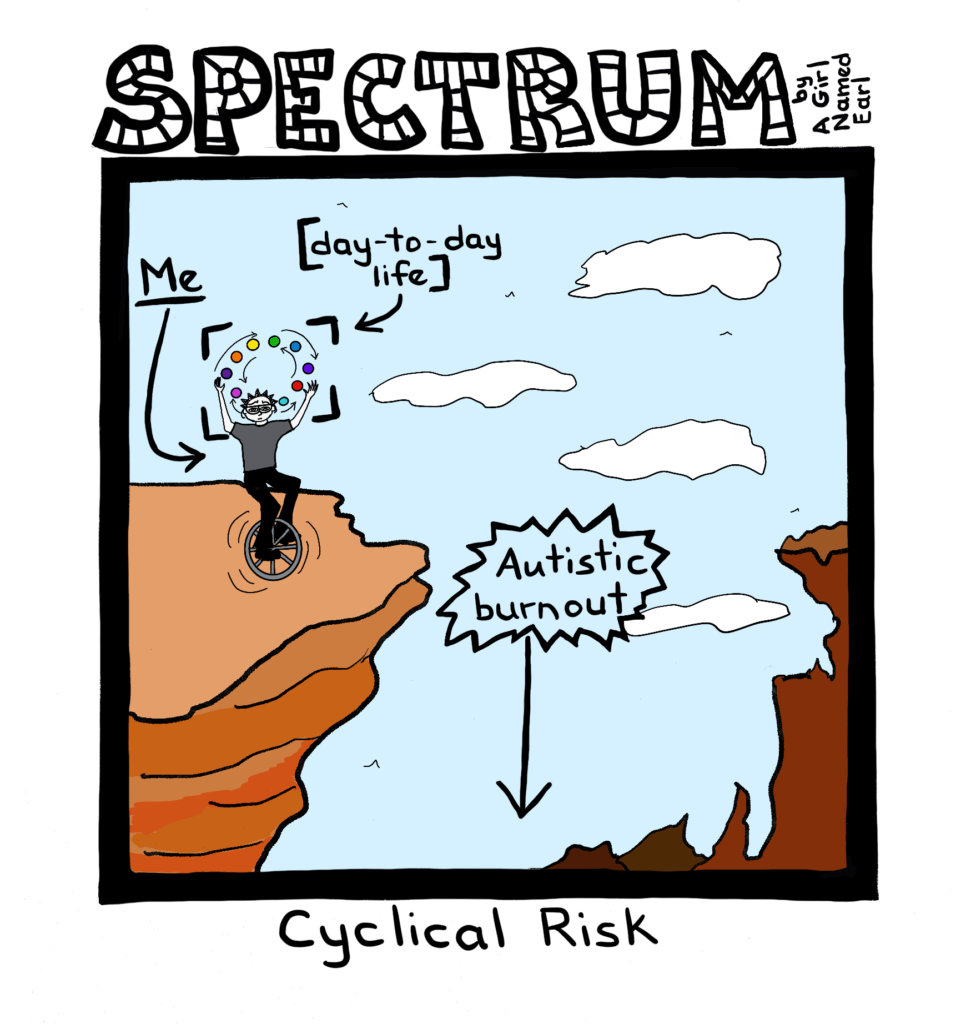
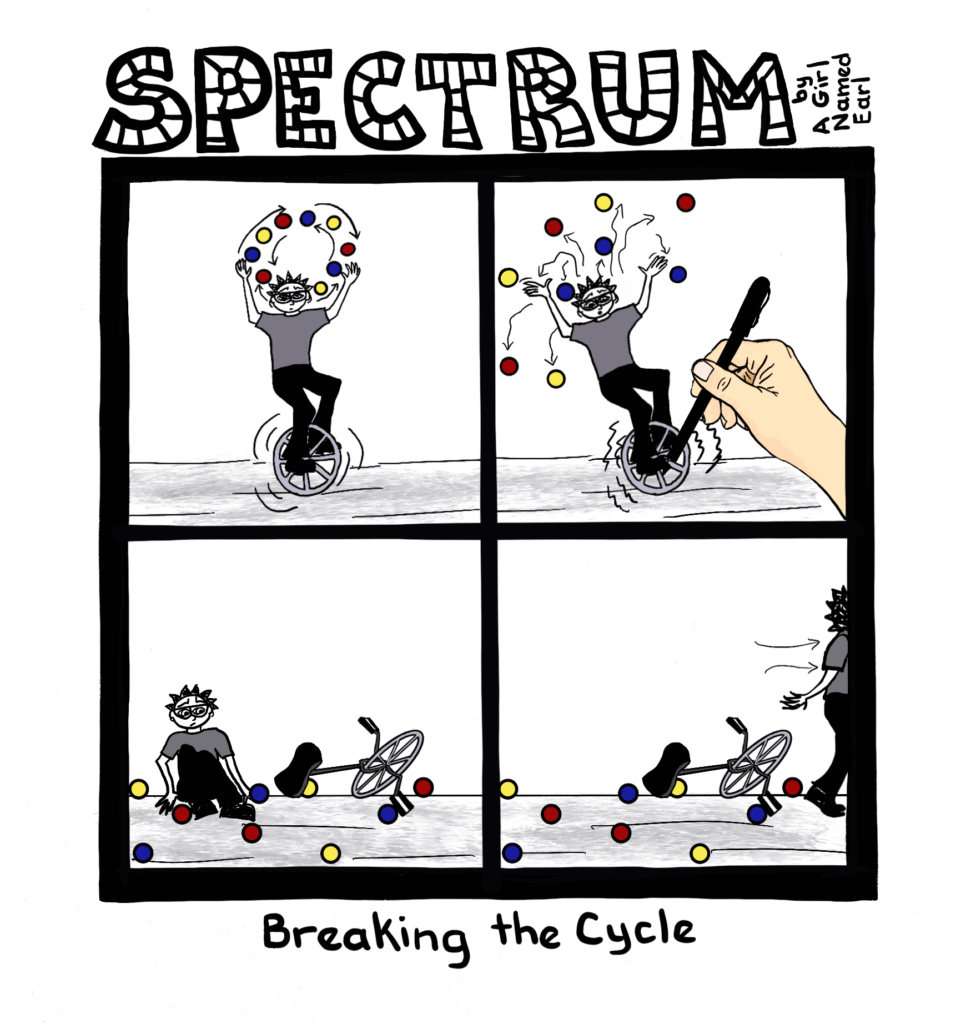
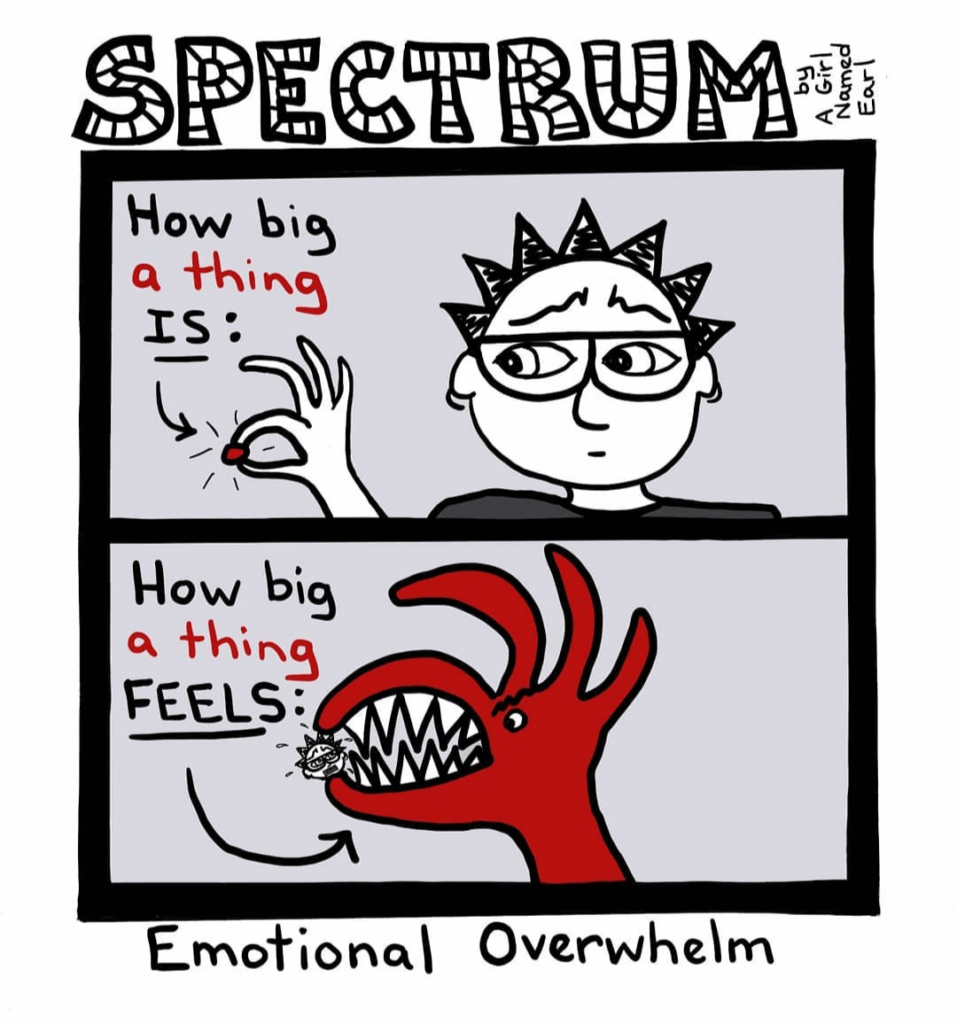
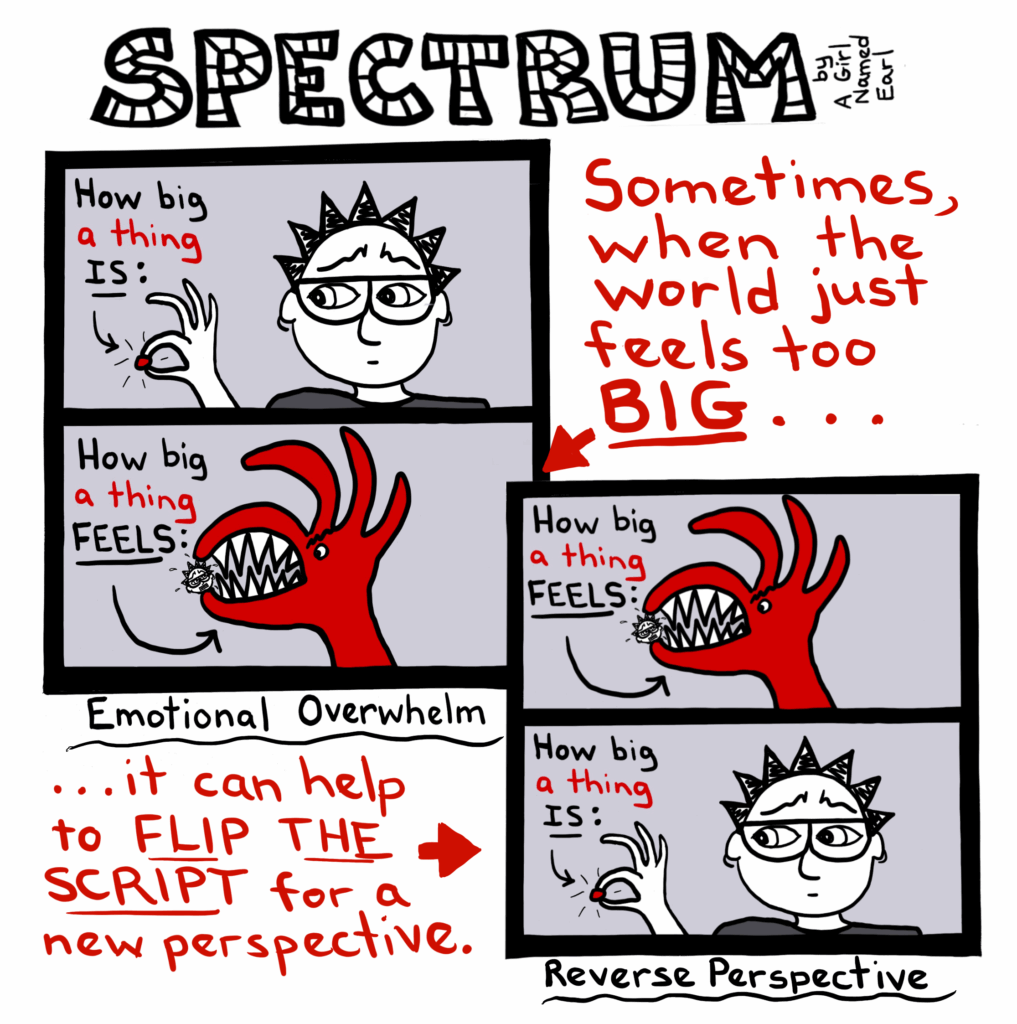
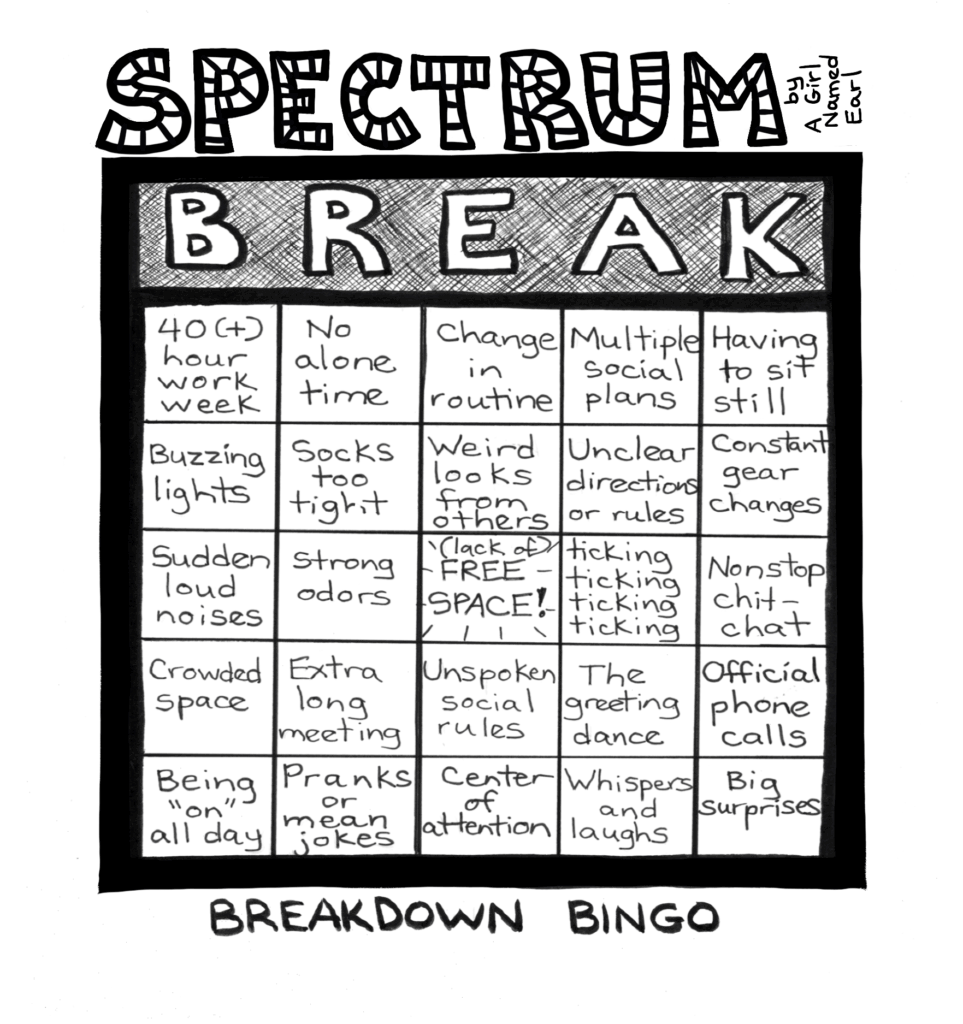
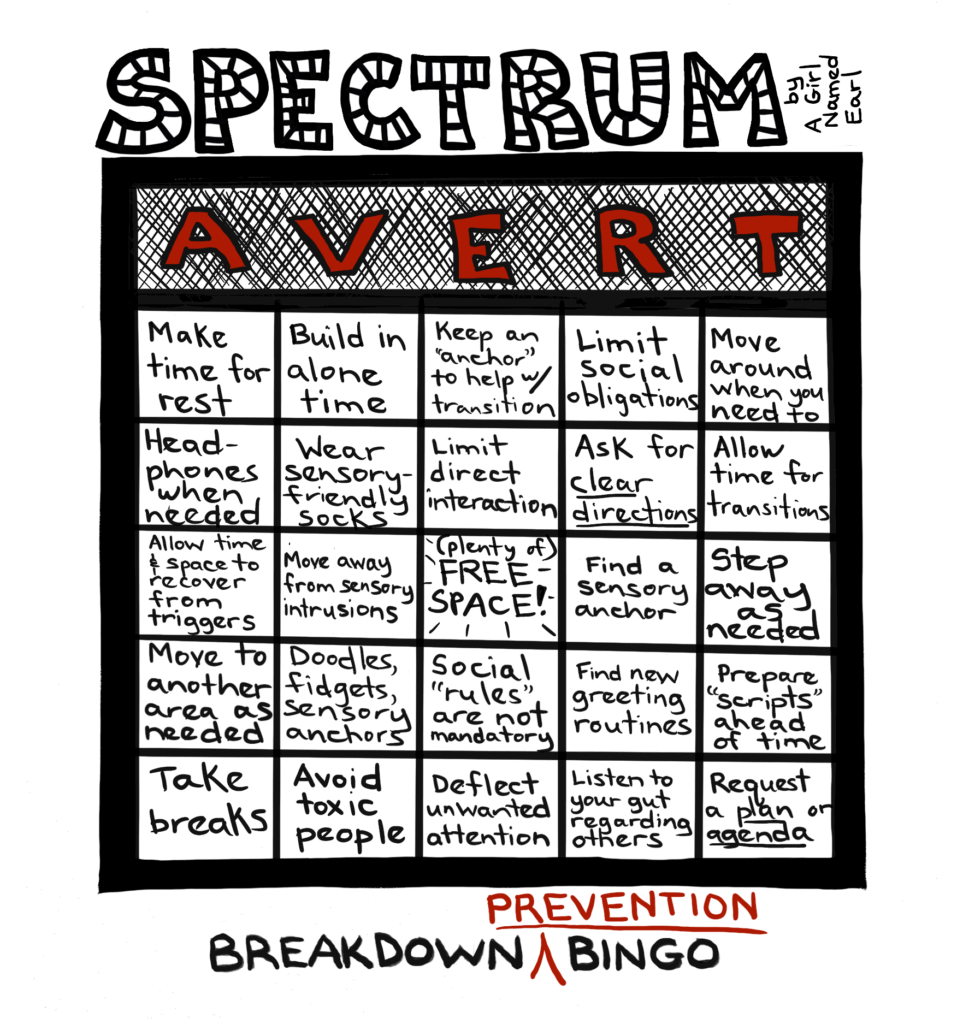
The cartoons I have chosen to share in this column are examples of this practice. The themes from these pairings include cyclical risk of burnout, emotional overwhelm, and societal factors that can lead to breakdown. By exploring these realities through drawing, they feel more manageable somehow. Even though the drawings to not solve the barriers or frustrations depicted, they have helped me to think more deeply about and subsequently move through them, or at least get unstuck enough to think about what the best next steps might be.
Addendum by Catherine Gouge and Blake Scott
Fitzgerald’s ongoing series continues to suggest, albeit implicitly, that RHM scholars might study and seek to better understand how comic-making (and perhaps, by extension, other forms of artistic practice) can be an embodied and self-reflective therapeutic practice involving rhetorical invention, particularly for people experiencing mental health challenges. This practice echoes dimensions of art therapy, particularly its emphasis on non-verbal meaning-making, emotional processing, and the creation of distance through metaphor and narrative (Malchiodi, 2011; Moon, 2016). While not a clinical intervention, reflexive response cartooning invites us to consider how rhetorical practices can support mental well-being through imaginative and embodied expression.
Although clearly grounded in her own experience, Fitzgerald’s therapeutic method of reflexive response cartooning might have applications for RHM scholars who face anxiety, mood, or other mental health disorders or challenges, including those embedded in their professional (e.g., research, teaching, service) as well as personal experiences.
Readers of RHM might further explore this method as a form of rhetorical invention, a resource for reflective research praxis, or a low-barrier strategy for opening mental health conversations in educational, clinical, or workshop settings. Fitzgerald’s framing of “getting unstuck” without insisting on solutionism also raises important questions for RHM about the cultural expectations of progress, productivity, and therapeutic success—questions that merit further inquiry within rhetoric and health contexts.
Fitzgerald’s practice resonates with feminist scholars like Ann Cvetkovich (2020), Gillian Rose (2022), Lauren Berlant (2011), and Donna Micciche (2007), who have shown how affect, creativity, and personal experience can serve as legitimate forms of inquiry and knowledge-making. Like these scholars, the process Fitzgerald engages and describes treats emotional life not as a distraction from scholarly or therapeutic work but as central to it—positioning reflexive response cartooning as a method of affective reflection, rhetorical invention, and self-study. This approach invites RHM scholars to consider how creative, embodied practices might expand the field’s methodological and pedagogical possibilities.
References
Berlant, L. (2011). Cruel optimism. Durham, NC: Duke University Press.
Cvetkovich, A. (2020). Depression: A public feeling. Duke University Press.
Malchiodi, C. A. (Ed.). (2011). Handbook of art therapy. Guilford Press.
Micciche, L. R. (2007). Doing emotion. Portsmouth, UK: Boynton/Cook.
Moon, B. L. (2016). Art-based group therapy: Theory and practice. Charles C Thomas Publisher.
Rose, G. (2022). Visual methodologies: An introduction to researching with visual materials (5th ed.). SAGE Publications.
Access a descriptive text file of this comic. Click on an image below to open a larger version.
Artist Bio
Erin Fitzgerald (a.k.a. A Girl Named Earl; she/they) is a multi-directional artist from Kentucky. Her current cartooning projects include a single-panel series focusing on neurodivergence and queerness (“SPECTRUM”), and a wordless graphic memoir-in-progress about mental health/care (“InQuest”).
To Cite
Fitzgerald, Erin. (2025). Spectrum [comics and artist statement]. Rhetoric of Health & Medicine, 8(4), http://medicalrhetoric.com/graphicRHM/home/archive/column-2/fitzgerald/