
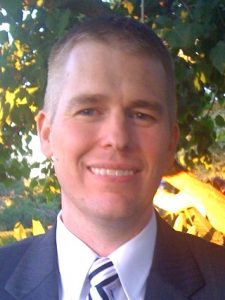
 Title: Assistant Professor of English
University: Arizona State University
Email: mark.hannah@asu.edu
Twitter: hannah_mark
Website: https://english.clas.asu.edu/content/mark-hannah
Description of Work:
I am a Rhetoric and Professional Communication scholar, with a legal background, who is new to the RHM field. My prior research pursues 2 distinct but related lines of inquiry: (1) how does shared language develop in sub–disciplinary research contexts, and (2) how do Rhetoric and Professional Communication scholars make a case for and apply their expertise in professional and interdisciplinary research contexts. I see RHM as an inquiry space in which to extend my research as well as contribute to the continuing development of the RHM field. In particular, I am excited by the prospect of examining the shared language practices of professionals in the many subfields of medicine as well as examining what the role of rhetoric is in supporting RHM scholars cross-cutting work with other scholars and practitioners in fields such as the Medical Humanities, Health Humanities, and Health Communication.
Symposium Submission:
The emerging field of the rhetoric of health and medicine (RHM) and the field of medical humanities are largely aligned in terms of their overall goals. Scholars of RHM are interested in research that can improve the material circumstances of health and well-being. Similarly, scholars in the medical humanities historically have focused on training doctors and medical students to develop the skills of close observation, empathy, and the ability to interpret “patient “language”” (Batistatou, Doulis, Tiniakos, Anogiannaki, & Charalabopoulos, 2010, p. 243) in order to practice medicine in a manner that not only improves patients’ health outcomes but does so in an empathic, compassionate manner.
And while driven by these similar interests, RHM and the medical humanities have important differences. RHM, for example, has largely aligned itself with the fields of rhetoric, composition, and technical communication to purse the common goal of “suggest[ing] alternative discursive practices” in healthcare workplaces (Heifferon & Brown, 2000 p. 247). The medical humanities, on the other hand, has more closely aligned itself with literature, creative writing, and philosophy. Medical humanities has also historically worked from within medicine (Podolsky & Greene, 2016) while RHM has queried/critiqued/uncovered “medicine’s epistemology, culture, principles, practices, and discourses” (Blake, Segal, and Keränan 2013, p. 2), from locations outside of or at the boundaries of medicine.
While the similarities and differences of these fields create a potential for fruitful collaborations, no research currently exists that systematically traces the fields’ distinctions and overlaps. This proposal is for a collaborative project that explores these tensions and intersections through an empirical study of the published literature. By tracing the methods, terms, funding mechanisms, and theoretical frameworks, our project promises to offer a landscape of the current state of Medical Humanities and RHM and directions for future research projects.
Our project’s methodology includes digital humanities and discourse analysis to conduct research at a broader scale. This is particularly important for these specific fields because historically scholars working in both RHM and the medical humanities have published in a wider array of venues. After establishing what the landscape for these disciplines looks like, we will take a sample of 150 articles (75 RHM and 75 Medical Humanities) for a discourse analysis.
This closer analysis of a sample of specific texts from our larger corpus will let us begin to consider what constitutes and/or characterizes the “work” of these areas in scholarly publications. More specifically, in these two areas, what are the topics examined and research methods employed? Additionally, how do scholars in these areas disseminate their research findings; i.e. what are the rhetorical, discourse practices of each area? Developing answers to these research questions will help technical and professional communicators (TPCs) identify patterns of medical discourse distinct to each area. Armed with knowledge of such patterns TPCs will be well positioned to strategically intervene in and contribute to the knowledge base of either research community. Furthermore, such knowledge will provide TPCs unique insight for comparing the “work” of these areas when evaluating the disciplinary benefits and drawbacks of separating RHM from the Medical Humanities.
References
Batistatou, A., Doulis, E. A., Tiniakos, D. Anogiannaki, A. & Charalabopoulos, K. (2010)
The introduction of medical humanities in the undergraduate curriculum of Greek medical schools: challenge and necessity. Hippokratia, 14(4): 241–243.
Blake, B., Segal, J. Z. and Keränan, L. (2013). Rhetorics of health and medicine: Inventional possibilities for ccholarship and engaged practice. Poroi: An Interdisciplinary Journal of Rhetorical Analysis and Invention, 9(1): Article 17.
Heifferon. B., & Brown, S. (2000). Guest editors’ column. Technical Communication Quarterly, 9(3): 245-248.
Podolsky, S. H. & Greene, J. A. (2016). Are the medical humanities for sale? Lessons from a historical debate. Journal of Medical Humanities, 37, 355-370.