
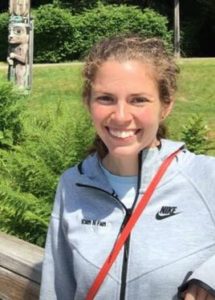
 Title: PhD Student
University: University of Minnesota – Twin Cities
Email: campeau@umn.edu
Twitter: N/A
Website: https://apps.cla.umn.edu/directory/profiles/campeau
Description of Work:
My research engages and follows the voices, stories, experiences, and knowledges of health- and illness-related publics that form outside of allopathic, institutional medicine. I have worked on field-based research projects with a community of families who choose not to vaccinate, with women seeking alternatives to medical birth control, and with women who form communities around their medically-contested, chronic pain.
My current research deals with pain—how we talk about it, when we don’t talk about it, how we treat it, and what practices, publics, subjectivities, and meanings arise around it. I track pain as it materializes in practices, objects, stories, and interactions. This method has lead me to places where pain is treated, narrated, grappled with, or cared for—to community clinics, online forums, yoga studios, specialists’ offices, and bedrooms repurposed into healing spaces. I cross back and forth between places where expert knowledge is produced and where expert knowledge descends into daily practices and lives. This way, I study pain practices as what Emily Martin (1995) calls “configurations,” clusters of ideas and practices that expand into “ways of seeing the world attached to forms of patterned activity.”
This long-term inquiry houses my current research project. I’m working as a volunteer-researcher at a community organization run by Somali women and serving Somali, refugee women. I’m working on a participatory research project on how women here seek and practice care for chronic, musculoskeletal pain and what resources and relationships women use and need. My partner organization is a nexus for diverse, conflicting, and hybridized forms of knowing and caring for the body. Study of these practices makes legible strategies of women who, like most of us, do not inhabit the made world of institutional medicine and who repurpose medical and non-medical tools and knowledges to fit their needs. Critical attention to these practices as material and rhetorical inventions can make salient emerging modes of care and patient subjectivities.
Martin, E. (1995) Flexible bodies: The role of immunity in American culture from the days of Polio to the age of AIDS. New York: Routledge.
Symposium Submission:
Undiagnosed: Practice and Invention in the Care of Chronic Pain
A glass piano balanced in my chest. A Burning. Getting stung by a bee, over and over again. My bones hollowing out. My preliminary interview participants often try to fit pain to language—an impossible task, but one that they are frequently asked to undertake. The women I interview recall bristling at the routine of fitting pain to their physicians’ language—putting a number to pain or agreeing that their pain is throbbing rather than acute, dull rather than numb. Many women recount hours spent composing in a Google search bar, seeking the right combination of words to conjure a diagnosis.
Chronic pain insists on the ways that the body resists representation and clear communication. Chronic pain, more than a crisis of language, provokes challenging questions about cultural and medical constructions of illness, distinctions between expert and experiential knowledges, and the differences between disease as a medical object and illness as an individual experience.
My dissertation traces how women living with chronic pain practice health, care, and pain. This analysis of practice builds on S. Scott Graham’s rhetorical-ontological study of pain medicine (2015). Graham couples Annemarie Mol’s (2009) premise that ontologies emerge from practices with rhetorical theory to study how clinical practices gather, coordinate, and ontologize experiences of pain into disease. Graham’s study concludes that pain is multiple, a claim that doctors understand in practice but one that medical technologies and discourses refuse to accommodate. Graham’s book offers both a model for bringing together rhetorical theory and new materialisms and an opening: while Graham’s book engages with and has deep implications for rhetorical and Science and Technology Studies scholarship as well as for pain management practitioners and patient advocacy groups, Graham’s work does not address the ways patients use medical knowledge and practice pain. Graham considers this absence in his book’s conclusion: “Does my account of how neuroimperialism silences fibromyalgics in an attempt to speak for them offer any more voice to those fibromyalgics? I still purport to speak for them” (p. 214).
My dissertation elaborates on Graham’s work by asking how patients practice pain and by studying these practices as important acts of improvised and constrained invention. How do women with chronic pain, left without a conventional narrative or predictable future, practice illness and health? How do these practices build new meanings for illness and health, pain and care? How might attention to practice produce a rhetorical analysis that engages rhetoric’s capacity for invention rather than critique?
I am conducting site-based, ethnographic research at a community-based medical clinic. I chose this site for two reasons. First, this site serves a diverse population—refugee women, immigrant women, and American women—who bring to the clinic different ways of making meaning and sense of pain. Second and relatedly, this site brings together medical doctors, alternative practitioners, therapists, and wellness advisers to offer different types of care. This site houses and supports various and conflicting ways of practicing health, enacting care, and experiencing the body and its pain.
I will recruit participants through my relationship with practitioners, who will introduce me to their patients and distribute information about my study. My ethnographic work will consist of the compilation of documents given to patients, ongoing semi-structured interviews, and ongoing focus group meetings. My preliminary interviews taught me that to understand daily experiences of pain and the practices that structure these experiences, I must engage with participants over time, not just in one-time interviews. I have also applied for funding to employ translators for interviews.
My ethnographic work follows two lines of inquiry.
I will ask the women participating in my study what they do with the technical, medical, and health-related information they receive from care providers. My preliminary interviews show that many patients both take seriously medical recommendations and alter these instructions to suit their needs, schedules, and health beliefs and values. Patients strategically integrate cultural, experiential, and medical knowledges in their practices of pain and of health, yet their medical and alternative-medical encounters often treat these different knowledge systems as incommensurable. Studying and making legible how patients use, alter, and revise medical instructions and tools can put forth an approach to pain and care that is more attentive to patients’ actual practices, needs, and constraints.
Second, I consider the communities and relationships that women develop around pain. Chronic illness spans, but rarely bridges, categories of class, race, and geography. While many of the women I have interviewed see their pain as implicated in larger problems and histories—racism, trauma, family history, environment, and a healthcare system poorly set up to treat chronic illnesses—few find grounds to take collective action. Instead, women often rearticulate these larger, social problems as either personal pursuits of health or as their fate. Why do so many women who live with chronic pain form little sense of collective identity? How and in what ways do women come together for support and action?
My material-rhetorical approach to practices of pain responds to Kelly Pender’s (2014) call for a rhetoric of health and medicine less oriented toward analysis of representations, meanings, and constructions and more toward enactments, practices, and invention. Pender urges rhetoricians to study less what an artifact or practice means and more what an artifact or practice can do. I plan to offer an account of practices of pain written not as opposition to or critique of our current, medical systems, but as one that both emerges from and articulates alternate ways of acting and living.
Works Cited
Graham, S. (2015). The Politics of Pain Medicine: A Rhetorical-Ontological Inquiry. Chicago: University of Chicago Press.
Mol, A. (2002). The body multiple: Ontology in medical practice. Durham: Duke University Press.
Pender, K. (May 2014). What if risk is real?: Toward a materialist reading of risk in a hereditarybreast cancer community. Paper presented at the biennial meeting of Rhetoric Society of America, San Antonio. TX.