
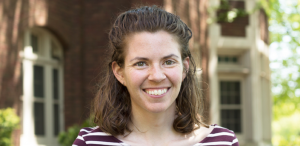
 Title: graduate student
University: University of Minnesota – Twin Cities
Email: campeau@umn.edu
Website: www.karicampeau.com
Description of your work
I study how patients navigate medically contested or medically uncertain diagnoses and practices. To do so, I ask questions about how patients understand, use, adapt, and change medical discourse and knowledge and how patients form communities from shared, embodied experiences.
In addressing these questions, I have studied, all within research teams and partnerships:
-
- vaccination communication and decision-making in a rural, Appalachian community in the wake of two pertussis outbreaks
- a state grant initiative to support Somali families with children with autism and how the grant’s intended users, Somali parents, navigated social service and medical processes
- how medical professionals learn cultural competency and how these instructional models affect clinical experiences and outcomes for culturally and linguistically diverse patients.
Across these projects, I have examined how individuals and communities come to understand illness and how their explanations influence healthcare decision making. I also focus on how patients form communities around embodied and/or medical experiences and beliefs.
For example, in my most recent study, my dissertation, I worked in partnership with a nonprofit women’s health center to engage how Somali parents understand autism, use services, and navigate divides between biomedical and other forms of care. This project developed from a collaboration between the health center and the state to administer micro-grants to Somali parents of children with autism and to enroll grantees in longer term social services. I developed two concepts, the resource double-bind and participatory refusal, aimed to theorize health decision-making and health movement formations and can inform policy initiatives toward engendering greater participation in scientific-medical knowledge production and greater access to medical resources.